
THE HOMEOWNER’S GUIDE TO SOLAR SOLAR BASICS
How solar actually works on a house
A home solar system turns sunlight into electricity. Your home can use that electricity as it is produced; depending on your setup, extra power can be stored or sent to the grid.
← Back to the guide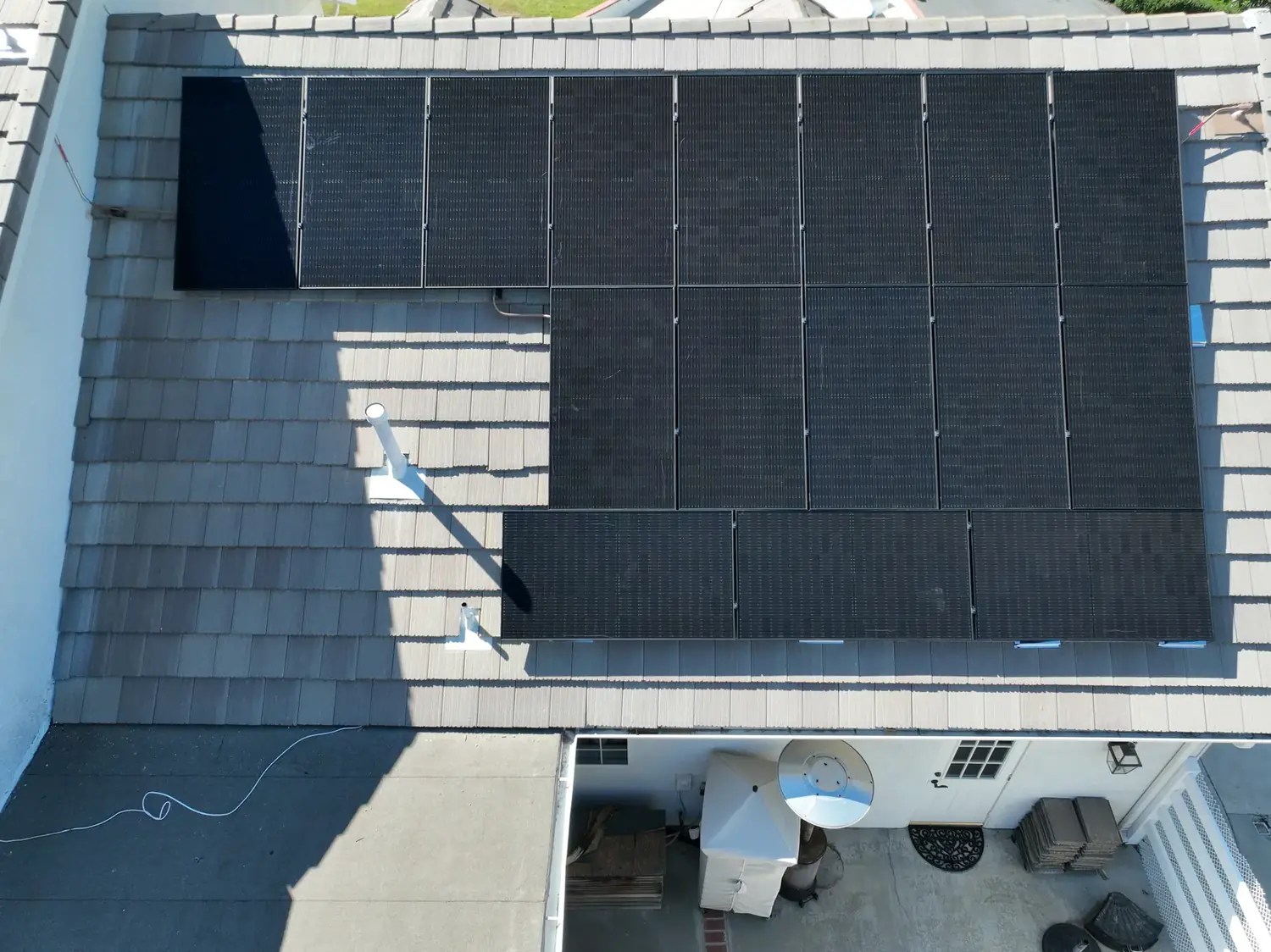 Solar installation example
On this page
FOLLOW THE ENERGY
From sunshine to your home.
A simple look at how the pieces work together.
- 01
Sunlight
Light reaches the panels on your roof.
- 02
Solar panels
Panels produce direct-current electricity.
- 03
Inverter
Converts solar power into usable AC electricity.
- 04
Your home
Your appliances use available solar power.
Store it
A compatible battery can save energy for later.
Share it with the grid
Eligible extra energy can be exported and credited under your utility plan.
Every home is different. Electrical connections, battery configuration and backup capability depend on the system design.
Explore the system componentsFour steps from sunlight to your home
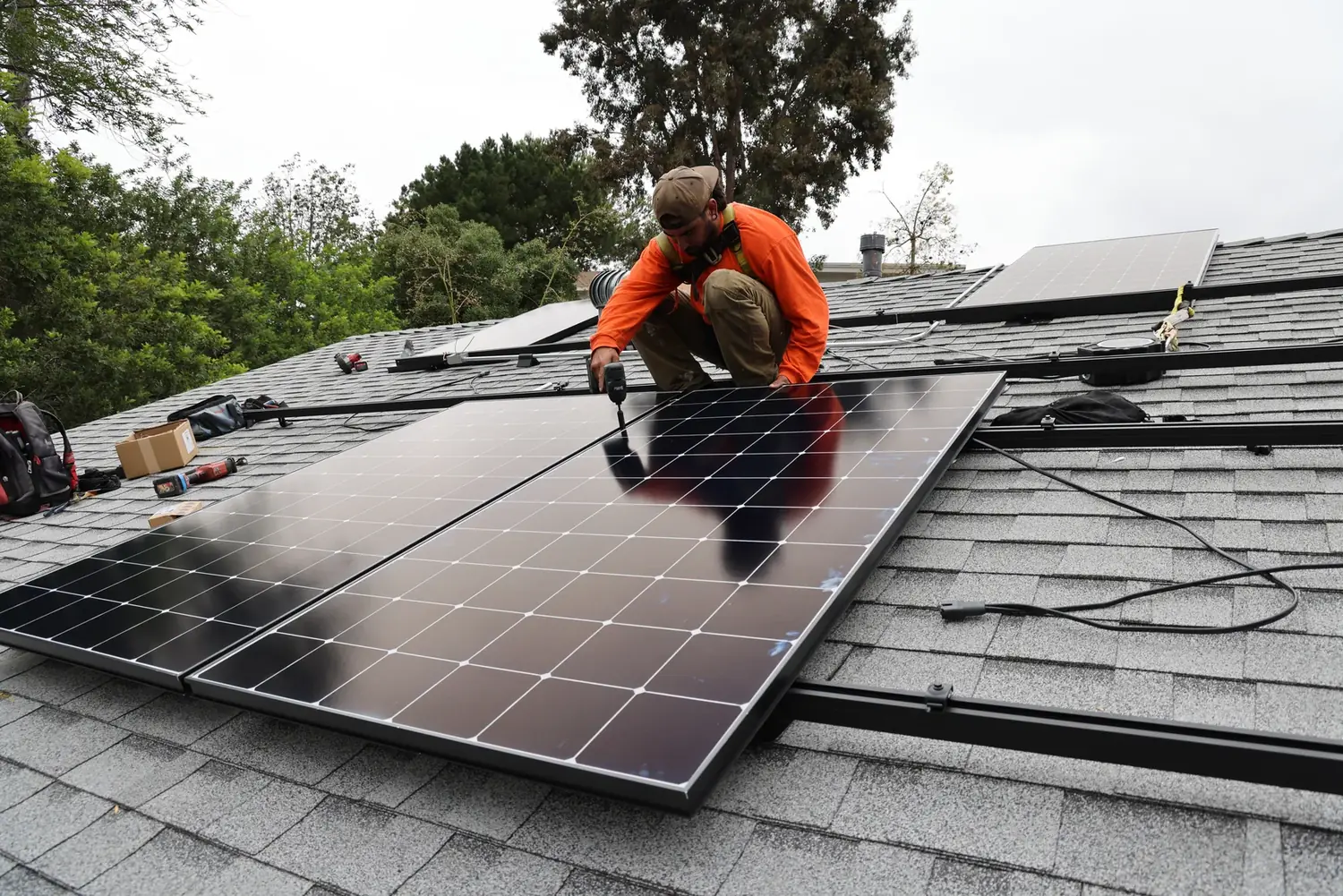
1. Panels make electricity
When sunlight reaches solar panels, their photovoltaic cells produce direct-current electricity. Output varies with sunlight, orientation, shade, weather, temperature and equipment.
2. An inverter changes the current
An inverter converts direct current to alternating current, the type used by most household appliances. Different designs use a central or string inverter, microinverters or other equipment.
3. Your home uses the power
Electricity generated can serve your home’s electrical loads. If production does not cover demand, a grid-connected home draws electricity from the utility. If the system produces extra, it may charge a compatible battery or export energy, depending on equipment and settings.
4. The meter records grid exchange
The meter measures electricity exchanged with the grid. Your utility plan determines charges and any eligible export credits. A monthly utility bill can remain even when your solar system generates electricity.
What happens at night or on cloudy days?
Panels do not generate in darkness and typically produce less under cloud cover. A grid-connected home can draw from the utility; a compatible battery can supply stored energy if designed and configured to do so. Seasonal weather, roof orientation and shading affect the results.
Will solar keep the lights on during an outage?
A standard grid-connected system normally shuts down during an outage for safety. Backup requires a system designed with appropriate isolation and compatible equipment; a battery can provide stored power to supported circuits. Some specially configured systems can provide limited power in sunlight without a battery. Ask which circuits and loads are covered and what happens when sunlight or battery charge is low.
Do panels need maintenance?
Ask the installer how to monitor system performance and what the equipment and workmanship warranties cover. Dust, debris or snow can reduce the light reaching panels; follow manufacturer instructions and use qualified help where needed. Do not assume a particular system needs frequent cleaning or that every maintenance service is included.
Questions to ask about your home
- How much electricity is the proposed system expected to produce, and what shade and usage assumptions are used?
- Which inverter and monitoring equipment are included?
- Will I have a battery or backup, and which appliances could it support?
- What utility charges and solar payments will remain?
Sources and further reading
Reviewed November 18, 2026. Actual equipment and utility rules vary.
KEEP EXPLORING